If your SaaS product has a single customer or user in the EU, or you're tracking the behavior of anyone physically in the EU, GDPR applies to you right now. It doesn't matter where your company is incorporated. This is what "territorial scope" under Article 3 actually means, and most SaaS founders underestimate how quickly it kicks in.
Three moves cut the most risk fastest. First, map every place personal data enters, moves through, and exits your systems. Second, decide where you're a data controller versus a processor for each customer relationship. Third, build a working intake process for data subject access requests before someone actually sends one.
Regulators expect a breach reported to the supervisory authority within a few days of discovery, and fines can be very substantial for serious violations. That's not a hypothetical number designed to scare you. It's the ceiling regulators have already used against companies far smaller than Meta or Google.
Quick wins for the next 30 days:
- Inventory every system that touches EU personal data, including analytics and support tools.
- Assign a controller/processor role to each customer data flow in writing.
- Turn on MFA for every admin account with production data access.
- Draft a one-page DSAR intake process, even a shared inbox with a defined response owner.
Key Takeaways
GDPR compliance for SaaS succeeds when teams map data flows first, assign controller/processor roles clearly, and build tested DSAR and breach response workflows before they're needed.
| Point | Details |
|---|---|
| Map data before drafting policy | Build the ROPA first so every DPIA, DPA, and retention rule reflects actual data flows. |
| Know your role per data flow | You're often a controller for marketing data and a processor for customer product data. |
| Test your DSAR process | Run a mock request internally and time how long it takes across every system. |
| Follow the 30/90/beyond sequence | Prioritize ROPA and DSAR intake first, then retention automation and DPIAs by day 90. |
| Get an outside audit for gaps | SaaS LaunchPad's platform audit flags compliance gaps and delivers a prioritized remediation roadmap. |
Table of Contents
- What Is GDPR for SaaS Companies?
- Why GDPR Compliance Matters for SaaS Platforms
- Core Obligations Every SaaS Company Must Meet
- Your Step-by-Step GDPR Compliance Checklist
- Security Controls and Breach Response for SaaS
- Managing Third-Party Vendors and Data Processing Agreements
- Building GDPR Into Everyday Product Operations
- Your 30/90/Beyond GDPR Action Plan
- Common GDPR Mistakes That Trigger Audits
- Cookie Banners and Consent Management for SaaS
- Special Category Data Inside SaaS Platforms
- How SaaS LaunchPad Speeds Up GDPR Readiness
- GDPR Readiness Without the Guesswork
- Sources
- FAQ
- Reading the Fine Print Isn't Optional
What Is GDPR for SaaS Companies?
The General Data Protection Regulation is the EU's data protection law, and its reach extends far past European borders. If you offer goods or services to people in the EU, or you monitor their behavior through cookies, analytics, or tracking pixels, you fall under it regardless of where your servers or your headquarters sit.
Run through this quick applicability check:
- Do you have paying customers or free-tier users based in the EU?
- Does your product use analytics, session recording, or advertising pixels that track EU visitors?
- Do you email or market to contacts in EU countries?
- Do any of your customers store their own EU end-user data inside your platform?
A "yes" to any of these means GDPR applies, and the role you play matters. Most SaaS companies wear both hats depending on the data in question. For your own marketing site, your billing system, and your employee records, you're the controller, making the decisions about why and how data gets processed. For customer data that lives inside your product (the CRM records, support tickets, or files your customers upload), you're usually the processor, acting on their instructions. That distinction determines what your Data Processing Agreements need to say and who answers first when a regulator calls. Tools like Microsoft Purview can help larger organizations classify and track this data across a Microsoft 365 environment, though most early-stage SaaS teams start with a simpler spreadsheet-based inventory.
Why GDPR Compliance Matters for SaaS Platforms
The financial exposure is real, but it's rarely the first thing that bites. Enterprise procurement teams now routinely ask for a signed DPA, a subprocessor list, and evidence of security controls before they'll sign a contract. Miss that documentation, and the deal stalls in legal review, sometimes for months, regardless of how good your product is.
Global data breach incidents have climbed year over year, and Statista's tracking shows the trend keeps rising rather than plateauing. That climb feeds directly into why enterprise buyers now treat privacy diligence as a gating step rather than an afterthought, not a courtesy check.
Regulators have also gotten sharper about cross-border transfer failures and consent dark patterns, things like pre-ticked consent boxes or cookie banners that make "reject all" three clicks harder to find than "accept all." Both have drawn enforcement actions across EU member states in recent years.
What this actually costs you if you get it wrong:
- Fines under Article 83 can scale up to very high amounts for the most serious violations.
- Stalled enterprise deals when procurement can't verify your subprocessor list or DPA terms.
- Incident response costs that balloon when you're building your breach process during an actual breach instead of before one.
- Churn risk when customers discover, after the fact, that your data handling didn't match what your privacy policy promised.
Core Obligations Every SaaS Company Must Meet
Your controller or processor status decides almost everything downstream. If you're the processor, your customer's DPA dictates what you can do with their data, and you need a signed agreement covering exactly that. If you're the controller, you own the lawful basis decision yourself.
Article 6 lists six lawful bases for processing, but SaaS companies typically lean on three:
| Lawful basis | Typical SaaS example |
|---|---|
| Contract | Processing billing and account data needed to deliver the service the customer signed up for |
| Legitimate interest | Basic product analytics used to fix bugs or improve reliability, balanced against user privacy |
| Consent | Marketing emails, optional cookies, or any feature the user can freely decline without losing core functionality |
A Data Protection Impact Assessment becomes mandatory under Article 35 whenever you're doing large-scale profiling, deploying AI features that make automated decisions about people, or processing special categories of data at scale. A fast DPIA checklist: describe the processing and its purpose, assess necessity and proportionality, identify risks to individuals, and document mitigation measures before you ship the feature, not after.
Your Record of Processing Activities is the document everything else depends on. For each processing activity, it needs to capture the purpose, categories of data and people affected, who receives the data, whether it crosses borders, how long you retain it, and what security measures protect it. Practitioner guidance consistently points to building the ROPA first: every DPIA, every DPA clause, every retention rule should trace back to what the ROPA actually says is happening, not the other way around.
Your Step-by-Step GDPR Compliance Checklist
Start with data mapping before you write a single policy. This is the mistake nearly every team makes: drafting a privacy policy from a template, then discovering it doesn't match what the product actually does. Map first, write policies second.
- Build the ROPA. For each system, capture what data it holds, why, who can access it, where it's hosted, and how long it's kept. A spreadsheet is fine for a first pass.
- Set retention schedules per data type. Account data might live for the contract term plus a defined window; server logs might purge after 90 days; support tickets might age out after two years. Automate the purge jobs rather than relying on someone remembering to run them.
- Build the DSAR intake path. A form or shared inbox, a defined verification step, and a documented owner who has 30 days (with a possible two-month extension for complex requests) to respond.
- Lock down access control. Apply least-privilege rules so support staff see only what a ticket requires, and engineers need an approved, logged, time-boxed process to touch production data.
- Test the DSAR flow end-to-end. Submit a real request internally and time how long it takes to locate, verify, and return the data. If it takes your team three weeks to find a single user's data across six services, you have a real problem before a regulator ever asks.
| Task | Typical timing |
|---|---|
| Initial ROPA draft | 1 to 2 weeks for a small to mid-size product |
| DSAR verification and response | Within 30 days of a verified request, extendable by two months for complex cases |
| Retention purge automation | 2 to 4 weeks to build and test across core services |
| Access control audit | Ongoing quarterly review |
Pro Tip: Run a mock DSAR against your own systems before a real one arrives. Time how long it takes to locate every record tied to one email address across your database, your support tool, your analytics platform, and your backups. Auditors and enterprise security reviewers will ask for exactly this kind of test log as evidence, not just a policy document.
Auditors want proof, not promises. That means dated screenshots of your access control settings, a DSAR test log with timestamps, and a retention schedule that matches what your deletion jobs actually do, not what a wiki page claims they do.
Security Controls and Breach Response for SaaS
Article 32 requires "appropriate technical and organizational measures," which in practice means encryption at rest and in transit, multi-factor authentication on every privileged account, role-based access control, and logging that's immutable enough to survive an insider trying to cover their tracks.
A breach notified to the supervisory authority within 72 hours of discovery is the baseline expectation under Article 33. Waiting until you have a full picture before notifying is the wrong instinct; regulators expect notification even with partial information, followed by updates as you learn more. Article 34 adds a second trigger: if the breach creates a high risk to individuals' rights and freedoms, you also have to tell the affected people directly, not just the regulator.
Your incident response checklist needs four stages: contain the exposure first, preserve logs and evidence before anything gets overwritten, assess the actual scope and risk to individuals, and only then draft customer communication with a clear timeline of what happened and what you've done about it.
For multi-tenant SaaS specifically, tenant isolation is the control that gets tested hardest. A misconfigured query filter that leaks one customer's rows into another's dashboard is the nightmare scenario, and it happens more often than vendors like to admit. Segment support tooling so an agent helping Customer A can't accidentally query Customer B's data, and log every production access event, including your own engineers'.
- Encrypt data at rest and in transit as a baseline, not an upgrade.
- Enforce MFA on every account with admin or production access.
- Keep audit logs immutable and retained long enough to reconstruct an incident timeline.
- Segment tenant data at the database and application layer, and test that segmentation regularly.
Managing Third-Party Vendors and Data Processing Agreements
Every subprocessor you use, your cloud host, your email provider, your analytics tool, your support platform, needs a signed Data Processing Agreement under Article 28. That agreement should spell out what the subprocessor can do with the data, require them to notify you of a breach fast enough that you can still hit your own 72-hour window, and give you audit rights if you need them.
Not every vendor carries the same risk, so classify them: infrastructure providers holding raw customer data sit at the top of the risk list, followed by support and communication tools that touch personal data incidentally, with pure analytics providers somewhere in the middle depending on what they collect. A poorly secured analytics tool is exactly the kind of vendor that has caused real exposure before; a well-documented credential leak at Mixpanel years ago is a reminder that vendor security posture is your problem too, not just theirs.

Cross-border transfers need their own mechanism. If you're moving EU data to a country without an EU adequacy decision, you need Standard Contractual Clauses plus a Transfer Impact Assessment documenting that the destination country's laws don't undermine the protections. The EU-U.S. Data Privacy Framework gives certified U.S. companies a cleaner path for transfers to the United States, but you still need to verify your vendor is actually certified, not just claiming compliance.
| Vendor category | Typical risk level | Key requirement |
|---|---|---|
| Cloud infrastructure / hosting | High | Signed DPA, encryption, subprocessor transparency |
| Customer support tools | Medium to high | Access controls, data minimization in tickets |
| Analytics and product tracking | Medium | Data minimization, pseudonymization where possible |
| Marketing and email platforms | Medium | Consent records, unsubscribe handling |
Keep a running subprocessor register and notify customers when you add a new one, ideally with an advance window they can object within before it goes live.
Building GDPR Into Everyday Product Operations
Compliance stops being a scramble once you assign clear ownership. A privacy owner, whether that's a founder wearing the hat early on or a dedicated Data Protection Officer once you hit certain processing thresholds, needs to sit close enough to product decisions to catch problems before launch, not after a customer complaint.
Add a privacy review gate to your release process for any feature touching personal data or adding a new third-party integration. A five-minute checklist beats a security review that happens only after something breaks.
- Assign a named privacy owner and a clear escalation path to legal counsel.
- Add a privacy-by-design checkpoint to your feature release checklist.
- Train engineering and support staff on GDPR basics at onboarding, then refresh annually.
- Keep attendance logs and quiz results as evidence for auditors who ask whether training actually happened.
- Maintain your ROPA, subprocessor register, retention schedule, and DSAR test logs as living documents, not one-time deliverables.
Engineering teams benefit from concrete patterns here: consent recording with a timestamp and version number, deletion pipelines that reach into backups and analytics warehouses (not just the primary database), and default settings that favor privacy unless a user actively opts into something broader.
Your 30/90/Beyond GDPR Action Plan
Microsoft's own GDPR action plan frames compliance as three phases, and it's a useful structure for any SaaS team regardless of what stack you run.
The first 30 days are about visibility and stopping the bleeding: build your initial ROPA, stand up the DSAR intake path, get DPAs signed with your highest-risk subprocessors, and turn on MFA everywhere it isn't already required.
Days 30 to 90 shift toward automation and depth: build retention automation so deletion isn't a manual chore, run DPIAs on any high-risk feature like profiling or AI-driven recommendations, build a search capability that can pull a person's data across every system for a DSAR, and audit your critical subprocessors more closely.
Beyond 90 days, the work becomes continuous governance: regular privacy audits, ongoing retention automation maintenance, and periodic review of data residency requirements as your customer base and infrastructure grow.
| Phase | Owner | Key deliverable |
|---|---|---|
| 30 days | Founder or privacy lead | Initial ROPA, DSAR intake path, MFA enforced |
| 90 days | Engineering + privacy lead | Retention automation, DPIAs for high-risk features |
| Beyond 90 days | Cross-functional (privacy, eng, legal) | Recurring audits, data residency review, updated subprocessor register |
Each phase needs an evidence artifact your future self, and any auditor, can point to: a dated ROPA export, a DSAR test log, a signed DPIA. A platform audit that maps enterprise buyer expectations against your current state can compress this timeline considerably, since it tells you exactly which gaps matter most before you spend weeks guessing.
Common GDPR Mistakes That Trigger Audits
The single most common mistake is drafting privacy policies before mapping actual data flows. The policy ends up describing an idealized version of your product that doesn't match reality, and that mismatch is the first thing a regulator or auditor notices.
A close second: defaulting to consent as the legal basis for everything, even processing that clearly fits under contract or legitimate interest. Over-reliance on consent means more banners, more friction, and more places where consent can be improperly recorded or withdrawn without anyone noticing.
Watch for these red flags in daily operations:
- Support agents pasting customer data screenshots into shared tickets or Slack channels.
- Broad admin access granted "just in case" rather than scoped to actual job need.
- Production database access with no logging or approval trail.
- No working deletion pipeline, meaning "delete my account" doesn't actually delete backups or analytics copies.
Fix each with a targeted test: run a sample DSAR to confirm deletion actually deletes, audit admin roles quarterly, and reclassify any vendor touching personal data that never got a signed DPA.
Cookie Banners and Consent Management for SaaS
Not every SaaS product needs a cookie banner. If your marketing site uses only strictly necessary cookies (session tokens, load balancing, security features), you're generally exempt from the consent requirement for those specific cookies. The moment you add analytics tracking, advertising pixels, or third-party embeds that set cookies, consent becomes mandatory before those scripts fire.
The mechanics matter more than most teams realize. A compliant banner needs a genuine "reject all" option that's just as easy to find and click as "accept all." Pre-ticked boxes don't count as valid consent, and burying the reject option behind multiple clicks is exactly the kind of dark pattern that has drawn enforcement action across EU member states.
Consent management platforms like CookieYes and OneTrust handle the banner logic, the consent logging, and the script-blocking that stops third-party trackers from firing before a user has actually agreed. Metomic focuses more on the data discovery side, helping teams find where cookies and tracking scripts are actually deployed across a codebase, which is useful before you even configure a banner.
Whatever tool you choose, log every consent decision with a timestamp and the exact version of the banner text the user saw. If your cookie policy changes, that's a new version, and users who already consented under the old text should see the banner again. Store consent records for as long as you might need to prove compliance, typically the length of your data retention period plus a reasonable buffer.
Special Category Data Inside SaaS Platforms
Special category data covers health information, biometric identifiers, genetic data, religious beliefs, sexual orientation, and a handful of other sensitive categories that carry a higher bar for lawful processing. Plenty of SaaS products handle this without realizing it: a wellness app tracking symptoms, an HR platform storing disability accommodations, an HR tool logging religious holiday requests for scheduling.

Processing special category data almost always requires explicit consent or falls under a narrow set of other legal grounds like employment law obligations or substantial public interest. The default lawful bases that work fine for ordinary account data, contract or legitimate interest, generally don't apply here.
If your platform touches special category data at any real scale, that's one of the clearest triggers for a mandatory DPIA under Article 35. Build extra safeguards around it: stricter access controls limiting who inside your own company can see the field, additional encryption or field-level pseudonymization, and a data minimization review asking whether you actually need to collect the sensitive attribute at all versus a less sensitive proxy.
Multi-tenant architectures add a wrinkle here too. If one customer's employees are logging health accommodation requests and another customer is running a general project management workflow, your data model needs to isolate that sensitive category cleanly, not just by customer, but by data type, so a broader database breach doesn't expose special category data alongside ordinary records.
How SaaS LaunchPad Speeds Up GDPR Readiness
Getting a compliance program from concept to audit-ready evidence usually takes longer than founders expect, mostly because nobody has mapped what the product actually does with data until someone forces the question. A platform audit that examines your product across security, data handling, and architecture at once surfaces those gaps in days rather than months of internal back-and-forth. That's the kind of accelerant a Product Excellence Blueprint is built to provide, turning scattered compliance tasks into a prioritized, sequenced plan your team can actually execute.
GDPR Readiness Without the Guesswork
Building a compliance program from scratch means figuring out, on your own, which gaps matter most: is your DPA language weak, is your DSAR process untested, is your retention automation actually working. SaaS LaunchPad's platform audit runs your product through a structured review that flags exactly these gaps and hands you a prioritized roadmap instead of a generic checklist.
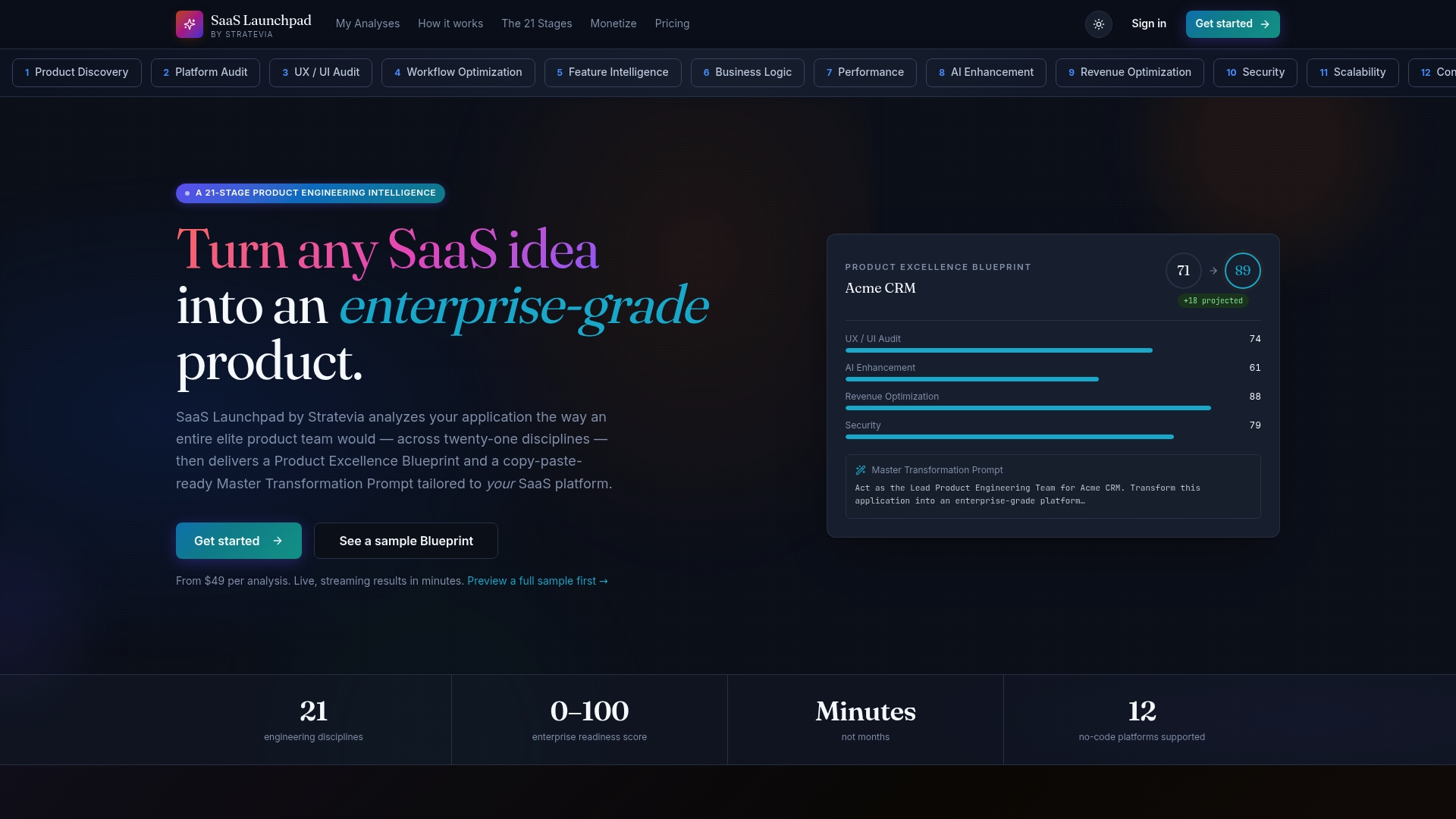
The deliverables map directly onto what this article covers: a review of your data flows against your ROPA, a check of your DPA language against Article 28 requirements, a test of your DSAR process end to end, and a prioritized remediation plan ranked by risk and effort. Where an internal team might spend weeks debating what to fix first, an audit report hands you that priority order on day one.
This isn't a replacement for legal counsel on contract language, but it is the fastest way to get a concrete, evidence-backed picture of where your product stands today. If you're ready to see exactly where your gaps are, start a Platform Audit and get a prioritized roadmap built specifically around your product, not a generic template.
Sources
- GDPR action plan - Microsoft Learn
- GDPR Compliance Framework: the 11 Deliverables, in Order — Legiscope
- Building GDPR-Compliant SaaS: The Technical Guide for Founders and Engineers — Hunchbite
- Statista — Number of data breaches worldwide
This article is general information, not a substitute for advice from a qualified lawyer. Consult a qualified legal professional about your own circumstances before acting on anything here.
FAQ
Does GDPR apply to SaaS companies outside the EU?
Yes. GDPR applies to any company that offers goods or services to people in the EU or monitors their behavior, regardless of where the company is based.
What is the difference between a data controller and a processor?
A controller decides why and how data is processed, while a processor acts on the controller's instructions. Most SaaS companies are controllers for their own marketing data and processors for customer data stored in the product.
How long do we have to respond to a data subject access request?
One month from a verified request, with a possible two-month extension for complex cases.
Do we need a DPO for a small SaaS company?
Not automatically. A Data Protection Officer becomes mandatory only when your core activities involve large-scale monitoring or large-scale processing of special category data; smaller teams can assign privacy ownership to a founder or ops lead instead.
How fast can we become audit-ready?
Timelines vary by product complexity, but a platform audit that maps your gaps against enterprise buyer expectations can compress months of internal guesswork into a prioritized action plan within days.
Reading the Fine Print Isn't Optional
Most GDPR guides treat the regulation as a legal checklist to hand off to counsel, and that's exactly where SaaS companies go wrong. GDPR is an engineering problem wearing a legal costume. The regulation cares about data flows, deletion pipelines, and access logs, things your engineering team controls directly, not things a lawyer can retrofit with a policy update.
The teams that struggle most are the ones who bought a privacy policy template, published it, and called it done. A policy that promises 30-day deletion but has no deletion pipeline that actually reaches your analytics warehouse and backup snapshots is worse than no policy at all. It's a documented admission that you knew the standard and didn't meet it.
What actually works is unglamorous: map first, build the boring automation second, and test your own processes like an adversary would. Run the mock DSAR. Try to break your own tenant isolation. Ask whether your "reject all" cookie button really takes one click. The companies that treat GDPR as continuous engineering discipline rather than a one-time legal project are the ones that pass enterprise procurement review without a scramble, and they're also, not coincidentally, the ones that never have to send a breach notification explaining why the deletion pipeline didn't work.